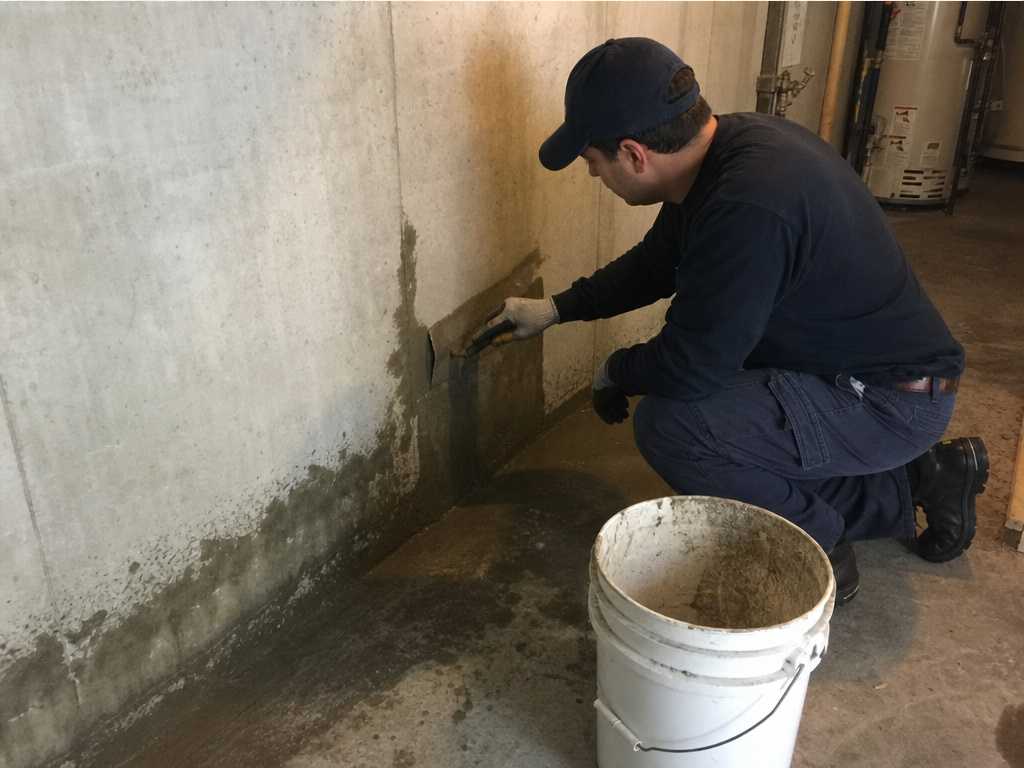
Water seepage in Overland Park often starts with spring rain overwhelming sump pumps in finished basements or winter cold snaps freezing supply lines in homes near Corbin Park and Downtown Overland Park. We classify incoming water as clean, gray, or black and map moisture with meters across drywall, subfloors, and slab edges before deciding what can be saved.
After 24 hours untreated, gray water from appliance leaks begins feeding mold on porous materials; by 48 hours black water from sewage backups or prolonged seepage requires full removal of affected drywall and flooring. Our process uses air movers and dehumidifiers placed to create negative pressure across the affected zone while we monitor daily readings until equilibrium is reached.
Johnson County homes on slab foundations near Metcalf 108 see different seepage patterns than basement properties in Prairie Village, where hydrostatic pressure pushes through cracks during heavy storms. We document every step with time-stamped photos, moisture logs, and an itemized scope so homeowners can submit clear records to their insurer without over-promising coverage.
Equipment stays until readings drop below 12 percent moisture content on wood and drywall; we remove only what cannot be dried in place and explain exactly why certain sections must be cut out. Final walkthrough includes a written summary of conditions found and steps taken so you know the structure is ready for repairs.
Water Seepage Repair Services We Offer
✓Foundation Crack Injection
Injects polyurethane or epoxy into active seepage cracks to stop water entry at the source before drying begins.
✓Sump Pump Failure Response
Removes standing water after pump failure, then sets drying equipment to protect finished basement spaces common in Overland Park.
✓Slab Leak Detection and Containment
Locates under-slab moisture migration using meters and thermal imaging, then contains and extracts water without major demolition.
✓Wall Moisture Mapping and Salvage
Identifies how far seepage has wicked into drywall and insulation so only saturated sections are removed while restorable areas are dried.
✓Winter Pipe Seepage Repair
Addresses leaks from frozen supply lines that thaw and seep behind walls during cold snaps in Johnson County homes.
✓Dehumidification and Structural Drying
Places commercial dehumidifiers and air movers in patterns proven to pull hidden moisture from subfloors and framing after seepage events.
Water Seepage Repair Cost in Overland Park, KS
| Service | Typical Range | What Affects It |
|---|---|---|
| Initial Moisture Assessment | Free | On-site visit with meter readings and written summary |
| Water Extraction | $300–$900 | Varies by category and volume; finished basements cost more |
| Drying Equipment Rental | $150–$450 per day | Includes air movers, dehumidifiers, and daily checks |
| Drywall Or Flooring Removal | $400–$1,200 | Only sections that cannot be dried; quoted after mapping |
| Full Documentation Package | $200–$350 | Photos, logs, and itemized scope for insurance submission |
Ranges are typical for Overland Park, KS and confirmed with an exact written quote before any work starts.
How it works
- 1
On-Site Assessment
We arrive within hours, test water category, map moisture across walls and floors, and note any visible damage in neighborhoods like Prairie Village or near the Overland Park Arboretum.
- 2
Extraction And Containment
Standing water is removed with pumps and wands; affected areas are isolated to prevent cross-contamination while we protect salvageable materials.
- 3
Equipment Placement And Monitoring
Air movers and dehumidifiers are positioned for maximum airflow; we return daily to log moisture levels until the structure meets drying standards.
- 4
Documentation And Walkthrough
Photos, moisture logs, and scope of work are compiled for your insurance file; we walk the home with you to confirm conditions before equipment removal.
Pricing
Cost depends on water category, square footage affected, and whether materials must be removed. Sudden water damage is often covered by homeowners insurance minus your deductible. We provide a free on-site assessment at 6800 W 115th St, Overland Park, KS 66211 during our posted hours.