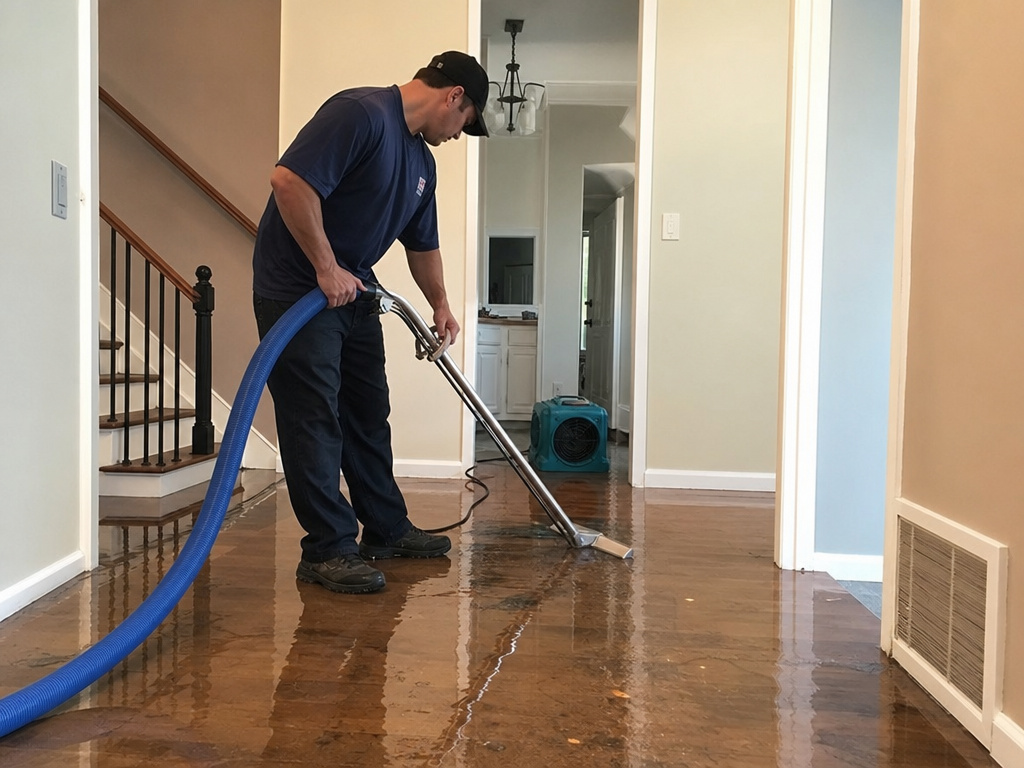
Water removal starts with identifying the category: category 1 clean water from supply lines, category 2 gray water from appliances or sump overflows, and category 3 black water from sewage or flood. In Overland Park's humid continental summers and winter cold snaps, finished basements and slab foundations trap water quickly, so extraction must happen before the 24-48 hour mold clock starts.
We use submersible pumps for standing water followed by extraction wands on carpet and pad. Moisture meters and thermal imaging map hidden water behind drywall or under flooring. Air movers and dehumidifiers are placed for directed airflow; we decide on-site whether drywall can be saved by cutting flood cuts or whether flooring must be removed based on saturation levels.
Local realities matter: spring storms overload sumps in Corbin Park and Prairie Village homes, while Corporate Woods area offices see slab leaks. We document every step with photos, moisture logs, and itemized scope so homeowners can submit accurate information to insurance without promising coverage.
After extraction we return daily to check readings and adjust equipment until levels return to normal. This separates true drying from surface extraction and reduces the chance of hidden mold growth in Johnson County basements.
Water Removal & Extraction Services We Offer
✓Basement Water Extraction
Removes standing water from finished basements common after sump pump failures during Overland Park spring storms.
✓Category 3 Black Water Cleanup
Handles contaminated flood water with containment, extraction, and disposal protocols required for sewage backups.
✓Slab Leak Water Removal
Extracts water from under concrete slabs in Downtown Overland Park and Metcalf 108 properties where leaks travel unseen.
✓Winter Frozen Pipe Extraction
Addresses sudden releases from frozen supply lines during cold snaps, including hidden wall and ceiling saturation.
✓Moisture Mapping & Documentation
Uses meters and imaging to locate hidden water and create the logs insurance carriers require for claims.
✓Carpet & Pad Extraction
Pulls water from flooring systems before mold sets in, often allowing pad removal while saving the carpet in many cases.
Water Removal & Extraction Cost in Overland Park, KS
| Service | Typical Range | What Affects It |
|---|---|---|
| Initial Assessment & Moisture Mapping | Free | Includes written scope for Johnson County claims. |
| Category 1 Clean Water Extraction | $900–$2,800 | Driven by volume and square footage in basements. |
| Category 3 Black Water Extraction | $1,800–$4,500 | Includes containment and disposal handling. |
| Daily Monitoring Visits | $175–$350 per visit | Required until moisture readings stabilize. |
| Equipment Rental (Air Movers & Dehumidifiers) | $250–$600 per day | Scaled to home size and water load. |
Ranges are typical for Overland Park, KS and confirmed with an exact written quote before any work starts.
How it works
- 1
First Call & Safety Check
We arrive at your Overland Park address, confirm the water category, shut off sources, and assess electrical risks before any extraction begins.
- 2
Standing Water Removal
Pumps and wands extract visible water from basements or slabs, separating category 1 water from gray or black water for proper disposal.
- 3
Moisture Mapping & Equipment Setup
We scan walls, floors, and cavities, then place air movers and dehumidifiers in the exact pattern needed for the affected square footage.
- 4
Daily Monitoring & Adjustments
Return visits track moisture levels until readings stabilize, preventing mold growth after the critical 24-48 hour window.
- 5
Final Documentation Walkthrough
We review moisture logs, photos, and scope with you so the information is ready for your insurance claim submission.
Pricing
Cost depends on water category, affected area size, and whether drywall or flooring must be removed. Insurance often covers sudden water damage minus your deductible. Free on-site assessment provided.