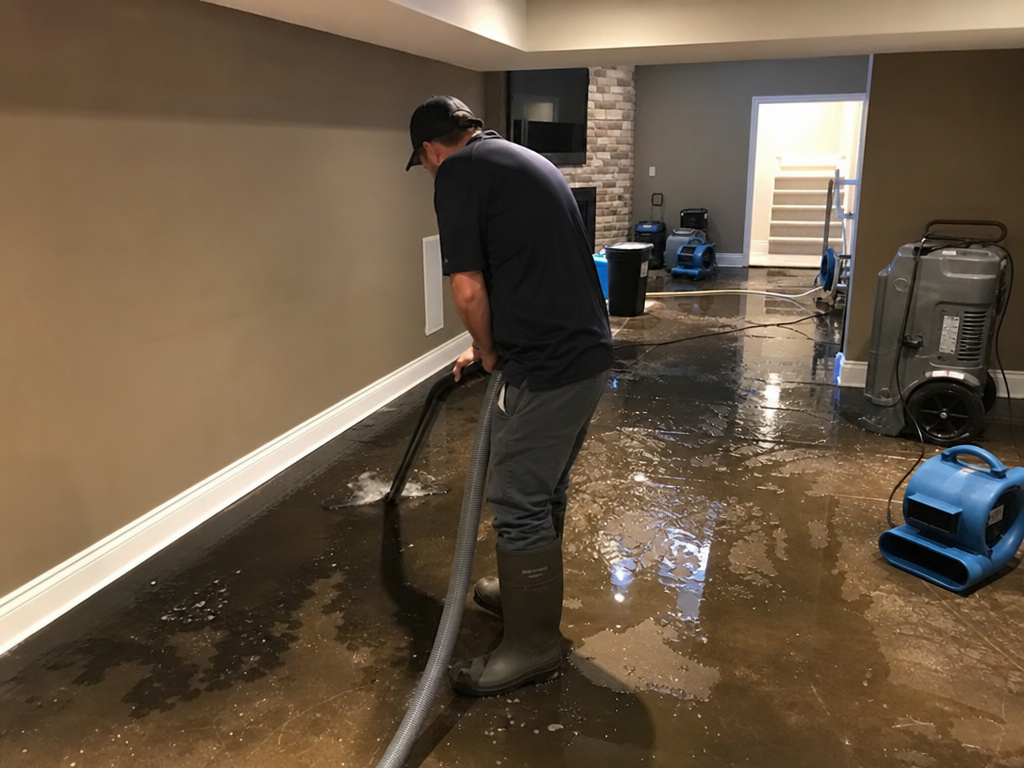
Overland Park sits in a humid continental climate with hot summers that drive heavy spring storms and cold winters that freeze supply lines in slab and basement foundations common across Johnson County. Finished basements in neighborhoods like Corbin Park, Metcalf 108, and Prairie Village often see water from sump pump failures or runoff near the Overland Park Arboretum and Corporate Woods office parks.
Water is classified on site as clean Category 1 from supply lines, gray Category 2 from appliances or sump discharge, or black Category 3 from sewage or floodwater. Class 1-4 damage levels guide decisions on whether carpet pad, drywall, or hardwood can be saved or must be removed to prevent hidden mold growth after the 24-48 hour window.
Technicians begin with moisture mapping using thermal cameras and meters to locate water behind walls and under slabs, then perform extraction with truck-mounted units before placing air movers and dehumidifiers in targeted patterns that pull moisture from saturated materials. Daily monitoring visits log readings until levels return to normal, producing the photos, moisture logs, and itemized scope homeowners need for insurance claims.
Sudden water damage from winter freezes or summer storms is frequently covered by homeowner policies minus the deductible, though gradual leaks and maintenance issues are not. Documentation starts at the first visit and continues through final walkthrough so adjusters receive clear evidence of affected areas and drying progress.
Water & Flood Cleanup Services We Offer
✓Basement Flood Extraction
Removes standing water from finished basements after sump failures common in Johnson County before it reaches living spaces.
✓Winter Pipe Burst Drying
Extracts and dries water from frozen supply line failures that occur during cold snaps in slab and basement homes.
✓Storm Water Removal
Handles rapid extraction after heavy spring and summer storms that affect neighborhoods near the Overland Park Arboretum and Deanna Rose Children's Farmstead.
✓Category 3 Black Water Remediation
Contains and removes contaminated floodwater while protecting unaffected areas in homes throughout Downtown Overland Park and Prairie Village.
✓Moisture Mapping and Structural Drying
Uses meters and thermal imaging to locate hidden moisture then deploys equipment to dry walls, floors, and cavities without unnecessary demolition.
✓Sump Pump Failure Cleanup
Addresses repeated water intrusion from failed sump systems in older Johnson County basements with targeted drying protocols.
Water & Flood Cleanup Cost in Overland Park, KS
| Service | Typical Range | What Affects It |
|---|---|---|
| Initial Assessment And Moisture Mapping | Free | Includes photos and scope for insurance; scheduled Mon–Fri 8am–6pm or Sat 9am–2pm. |
| Category 1 Clean Water Extraction And Drying | $900–$2,200 | Typical finished basement in Corbin Park or Prairie Village; varies with area size. |
| Category 3 Black Water Containment And Remediation | $1,800–$4,500 | Higher due to PPE, disposal, and additional safety protocols. |
| Daily Monitoring Visits | $150–$300 per visit | Continues until moisture levels stabilize; required for claim documentation. |
| Winter Pipe Burst Drying Package | $1,200–$2,800 | Includes equipment for slab and basement homes after cold snaps. |
Ranges are typical for Overland Park, KS and confirmed with an exact written quote before any work starts.
How it works
- 1
Emergency Response
Call arrives and a crew reaches the property within hours to assess safety, stop the source, and begin extraction of standing water.
- 2
Assessment And Documentation
Technicians map moisture with meters and cameras, photograph affected areas, and create the itemized scope for the insurance claim.
- 3
Extraction And Equipment Placement
Truck-mounted pumps remove bulk water, then air movers and dehumidifiers are positioned based on water category and class to begin structural drying.
- 4
Monitoring And Final Walkthrough
Daily visits track moisture levels until dry; once readings stabilize, equipment is removed and a final inspection confirms the home is ready for repairs.
Pricing
Cost depends on water category, square footage affected, and whether materials must be removed. Insurance often covers sudden events like pipe bursts or storm damage after the deductible. Free on-site assessment provided from the 6800 W 115th St location.